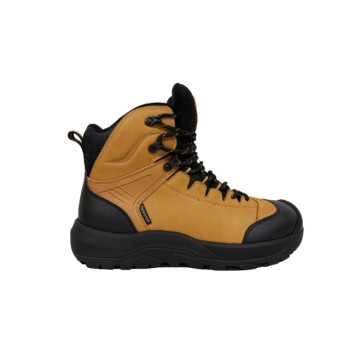
The primary necessity stems from the urgent need to mitigate the long-term environmental impact of traditional footwear without compromising structural integrity. Conventional outsoles and winter boots rely heavily on non-degradable synthetic materials that persist in ecosystems for centuries. Integrating biodegradable or recycled plastics is essential to solve this end-of-life disposal challenge and reduce carbon emissions across the product's entire lifecycle, all while maintaining the rugged durability required for protective footwear.
Transitioning to sustainable materials is not just an ethical imperative but a technical evolution in material science. It enables the production of high-performance footwear that withstands physical stress while eliminating the legacy of permanent waste.
The Environmental Imperative
Solving the End-of-Life Crisis
Traditional manufacturing of heavy winter boots and outsoles utilizes robust synthetics designed for permanence. Unfortunately, this means these materials persist in the environment for centuries after disposal. Incorporating biodegradable elements ensures that footwear does not become a permanent pollutant once it serves its purpose.
Lifecycle Carbon Reduction
The shift toward circular materials addresses more than just physical waste. Utilizing high-content recycled plastics or biodegradable alternatives significantly contributes to the reduction of carbon emissions throughout the shoe’s life cycle, from production to disposal.
Engineering for Performance
Matching Traditional Durability
A critical requirement for outsoles and winter boots is the ability to withstand harsh conditions. Winter footwear, in particular, must resist wear from moisture, extreme cold, and physical stress to ensure a long lifespan.
The Feasibility of Sustainable Toughness
Modern biodegradable and recycled materials have evolved to meet these rigorous standards. Manufacturers can now incorporate these materials to maintain the necessary protective performance and durability expected of technical footwear, ensuring that sustainability does not come at the cost of product failure.
Understanding the Trade-offs and Challenges
The Operational Knowledge Gap
While the environmental benefits are clear, the manufacturing process presents distinct challenges. Advanced circular materials often possess physical and chemical properties that differ significantly from traditional virgin synthetics.
Risks to Equipment and Quality
Simply swapping materials without adjustment is a recipe for failure. Without specialized training and precise calibration, processing these materials can lead to substandard product quality or even damage to high-precision machinery. Successful implementation requires a commitment to employee skill training to manage these new material characteristics effectively.
Overcoming Consumer Perception
Historically, recycled materials have suffered from associations with low-end or inferior quality. To make this transition successful, these inputs must be strategically rebranded as breakthrough technical materials. By emphasizing the high-tech R&D behind these polymers, manufacturers can frame them as premium, innovative solutions rather than mere waste recovery.
Making the Right Choice for Your Goals
To successfully integrate these materials, you must align your engineering, manufacturing, and marketing strategies.
- If your primary focus is Environmental Impact: Prioritize materials that offer verified end-of-life degradability to directly address the issue of centuries-long persistence in landfills.
- If your primary focus is Manufacturing Efficiency: Invest heavily in employee training and equipment calibration to handle the unique processing parameters of circular materials, preventing costly machinery damage.
- If your primary focus is Brand Positioning: Market the recycled content as a result of advanced R&D and technological leadership to counteract negative perceptions of inferior quality.
Ultimately, the adoption of these materials represents a shift toward responsible high-performance engineering that protects both the user and the planet.
Summary Table:
| Aspect | Traditional Materials | Sustainable Alternatives (Biodegradable/Recycled) |
|---|---|---|
| Environmental Impact | Persists for centuries in landfills | Reduced waste and end-of-life degradability |
| Carbon Footprint | High emissions from virgin production | Significantly lower lifecycle emissions |
| Durability | High resistance to wear/stress | Engineered to match traditional performance standards |
| Market Perception | Standard industry expectation | Rebranded as high-tech, premium innovation |
| Manufacturing | Established, predictable processes | Requires specialized training and precise calibration |
Partner with 3515 for Sustainable Footwear Excellence
As a large-scale manufacturer serving distributors and brand owners, 3515 offers comprehensive production capabilities for all footwear types, anchored by our flagship Safety Shoes series. Our extensive portfolio covers work and tactical boots, outdoor shoes, training shoes, and sneakers, as well as Dress & Formal shoes to meet diverse bulk requirements.
We provide our partners with technical expertise in integrating biodegradable and recycled materials, ensuring your brand meets modern environmental standards without sacrificing the rugged durability of high-performance footwear. Let us help you lead the market with innovative, eco-friendly solutions tailored to your specific needs.
Ready to elevate your product line?
Contact us today to discuss your manufacturing requirements.
参考文献
- Slađana Starčević, Ana Vjetrov. Barriers to sustainable development in the fashion industry: Supply chain complexity and consumers' attitude-behavior gap. DOI: 10.5937/skolbiz1-35074
本文还参考了以下技术资料 3515 知识库 .