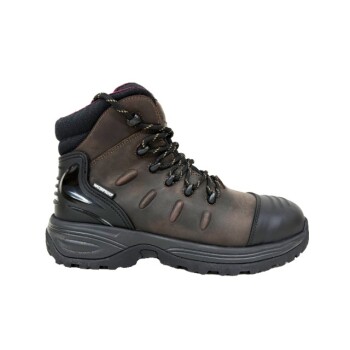
The primary advantages of leather work boots are their exceptional durability, reliable weather protection, and unique ability to mold to your foot for a custom, supportive fit over time. Unlike synthetic materials, full-grain leather offers a proven track record of longevity and resilience in demanding work environments.
While many materials offer specialized benefits, leather remains the benchmark for work boots because it uniquely combines robust protection with a personalized fit that improves with age. Understanding its inherent trade-offs is the key to deciding if it's right for you.
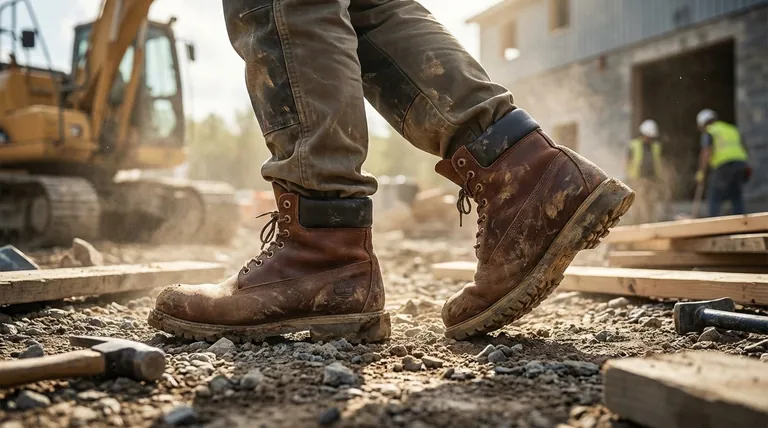
The Core Advantages of Leather Construction
Leather has been the material of choice for footwear for thousands of years for clear, practical reasons. Its natural structure provides a blend of strength and adaptability that is difficult to replicate.
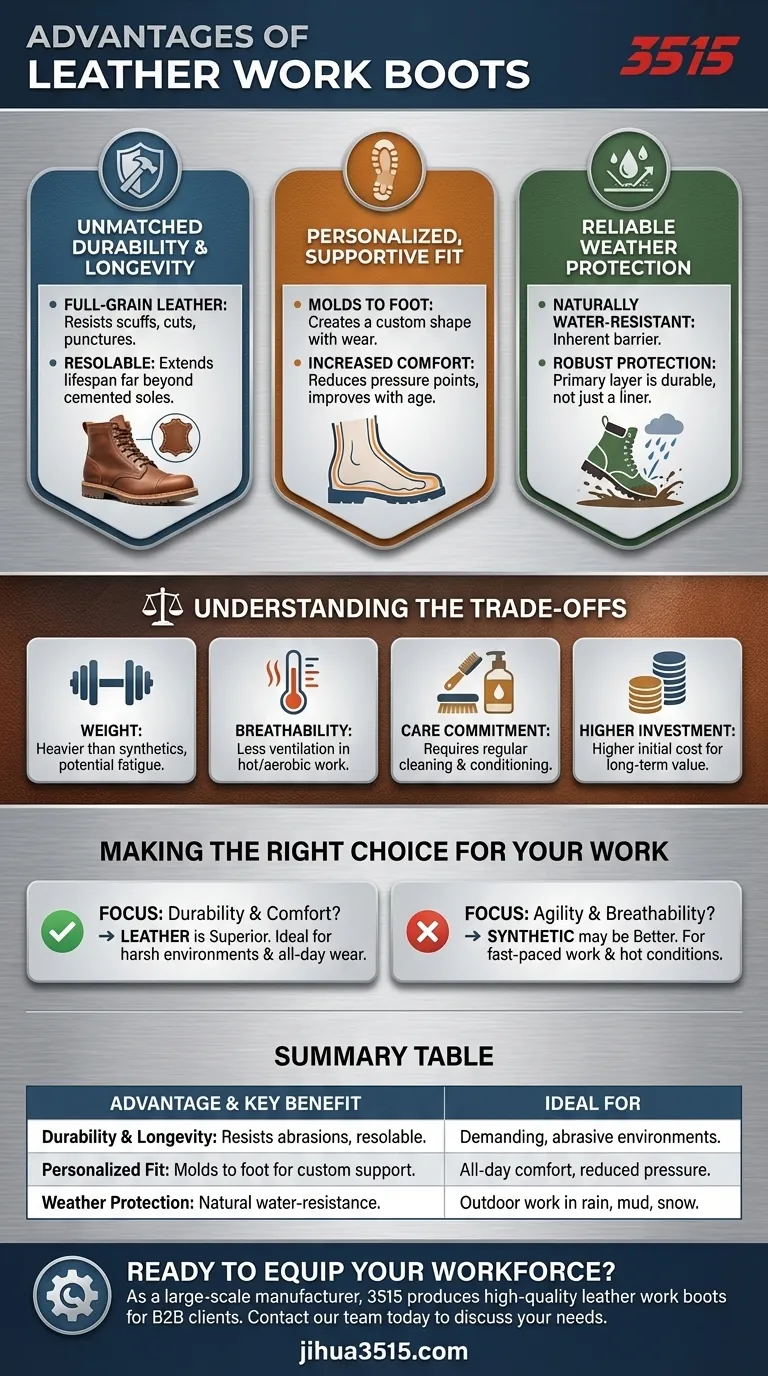
Unmatched Durability and Longevity
Full-grain leather is an exceptionally tough material, making it ideal for abrasive work areas where boots face constant wear and tear. Its dense fiber structure resists scuffs, cuts, and punctures better than most synthetic fabrics.
With proper care, a single pair of high-quality leather boots can provide multiple seasons of reliable service. Many full-leather boots also offer the ability to be resoled, which can dramatically extend their usable lifespan far beyond that of a cemented-sole synthetic boot.
A Personalized, Supportive Fit
The most celebrated feature of leather is its ability to mold to the specific shape of your foot. As you wear the boots, the leather gradually conforms to your unique contours, creating a truly custom fit that reduces pressure points and increases comfort.
While some traditional designs require a "break-in" period, many modern leather boots are engineered to be comfortable almost immediately. This molding process creates a level of personalized support that is difficult to achieve with static, synthetic materials.
Reliable Weather Protection
Leather provides a formidable barrier against the elements. It is naturally water-resistant, and when properly treated or made from waterproofed hides, it offers excellent protection from rain, mud, and snow.
Crucially, a leather boot’s water resistance is inherent to the material itself, not just a thin synthetic liner like Gore-Tex. This makes it more robust, as the primary protective layer is less likely to fail or get punctured over time.
Understanding the Trade-offs of Leather Boots
No material is perfect. To make an informed decision, you must weigh leather's significant advantages against its practical trade-offs.
The Matter of Weight
Leather is typically heavier than synthetic alternatives. While this weight often correlates with durability, it can lead to more fatigue over a long workday compared to lighter-weight fabric or composite boots.
The Breathability Compromise
While leather is a naturally breathable material, it is generally less breathable than modern synthetic mesh fabrics. In very hot climates or during highly aerobic work, your feet may feel warmer than they would in a boot designed specifically for maximum ventilation.
The Commitment to Care
Leather's legendary longevity is not unconditional. It requires regular cleaning, conditioning, and occasional reproofing to maintain its strength and water resistance. Neglecting this care can lead to the leather drying out, cracking, and losing its protective qualities.
The Upfront Investment
High-quality leather work boots often come with a higher initial price tag than many synthetic options. This should be viewed as an investment in longevity, as their potential lifespan can make them more cost-effective in the long run.
Making the Right Choice for Your Work
Choosing the right boot material depends entirely on the demands of your job and your personal priorities.
- If your primary focus is maximum durability and protection: Leather is the superior choice for harsh, abrasive environments where boots need to withstand significant abuse.
- If your primary focus is long-term comfort and a custom fit: Leather's ability to mold to your foot is unmatched, making it ideal for those who spend all day on their feet.
- If your primary focus is lightweight agility and maximum breathability: A synthetic or hybrid boot might be a better fit, especially for fast-paced work in hot conditions.
Ultimately, choosing leather is an investment in a durable, protective tool that becomes uniquely yours with time and care.
Summary Table:
| Advantage | Key Benefit | Ideal For |
|---|---|---|
| Durability & Longevity | Resists abrasions, cuts; can be resoled for extended life. | Demanding, abrasive work environments. |
| Personalized Fit | Molds to your foot's shape over time for custom support. | All-day comfort and reduced pressure points. |
| Weather Protection | Naturally water-resistant; offers a robust barrier. | Outdoor work in rain, mud, and snow. |
Ready to equip your workforce with durable, custom-fitting leather boots?
As a large-scale manufacturer, 3515 produces a comprehensive range of high-quality leather work boots for distributors, brand owners, and bulk clients. We combine proven materials with modern manufacturing to deliver footwear that offers superior protection and long-term value.
Contact our team today to discuss your specific needs and discover how our production capabilities can provide the perfect footwear solution for your business.
图解指南
相关产品
- 用于批发和定制生产的耐用皮革工作靴
- 为品牌批发可定制楔形鞋底的皮革工作靴
- 用于批发和定制 OEM 制造的耐用皮革工作靴
- 耐用皮革工作靴批发制造商及定制工厂
- 用于批发和自有品牌的耐用固特异包边皮革工作靴